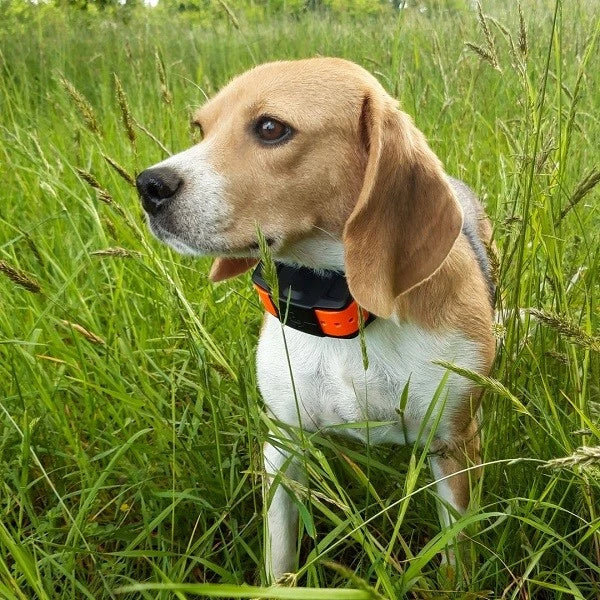

Useful in countless situations, a dog’s sense of smell, thanks to its remarkable efficiency, is capable of extraordinary feats such as detecting prey from miles away, identifying the presence of a disease in a patient, or even rescuing disaster victims during natural catastrophes. Smell is undoubtedly the most highly developed sense in dogs. In fact, a dog’s nose is capable of detecting 500,000 different odors, whereas humans can detect only about 4,000! This marvel of nature is, of course, essential for the canine to survive in its natural environment, but it is also of great value to humans, whether for hunting, harvesting, or even saving lives and protecting health, as we will discover in this blog article!

Structure of a Dog's Nose
The nose, or dog’s nose, includes a bony structure and is covered by a very thick epidermis with a well-developed outer keratin layer. When a dog breathes, air travels to the lungs just as it does in humans. However, dogs sniff in short bursts (3 to 5 small inhalations). Thanks to the bony structure of the dog’s nose, odor molecules travel deep into the nasal cavities, where they accumulate, increasing the dog’s ability to interpret scents and understand its environment. In addition, a dog’s nostrils are mobile. This allows the dog to accurately determine the origin and direction of a particular odor, whereas humans, with fixed nostrils, can detect a smell but have difficulty identifying its precise source. A dog such as a Labrador Retriever, which possesses up to 225 million olfactory cells, can therefore follow, search for, and track a scent thanks to the orientation of its mobile nostrils.
All of this is explained by the anatomy of its olfactory system, which consists in particular of:
- two nostrils, allowing the dog to breathe and detect odors. These make possible a form of “two-dimensional” smell: the dog can not only detect an odor but also determine its source;
- the alar fold, which divides incoming air into two streams: one side is used for breathing, while the other is used for odor detection and identification;
- the vomeronasal organ (Jacobson’s organ), located directly above the upper jaw and sensitive to pheromones;
- an olfactory membrane (mucous membrane) composed of receptor cells (epithelial cells), responsible for capturing odor molecules and immediately transmitting information to the dog’s brain;
- an olfactory bulb, which processes the information collected by the olfactory membrane.

The dog’s muzzle is, of course, the visible part of its respiratory system, since it is through this organ that air enters and leaves the body. Anatomically, its nose is connected to the pharynx, an organ located at the junction of the respiratory and digestive systems. By contracting or relaxing, the pharynx allows air or food to move in the correct direction. Dogs can also breathe through their mouths, especially when it is hot. This cooling mechanism is known as panting.
For comparison, a dog’s sense of smell is approximately 40 times more powerful than that of a human. Your loyal companion is equipped with 225 million olfactory nerve cells, or neurons (equivalent to approximately 200 million olfactory receptors), whereas humans possess only about 5 million (with roughly 400 types of olfactory receptors), and that is among the most sensitive individuals!
The Importance of a Dog's Sense of Smell
An Essential Tool in Nature
If dogs surpass us in terms of smell, it is above all because it serves a vital purpose. This ability is extremely important for them in the wild, dating back to their origins in the Canis lupus species. A dog’s sense of smell is a matter of survival because it is how the animal recognizes food, detects prey, and ultimately finds nourishment. Likewise, dogs navigate and understand their environment through scent.
Grooming and concealment also depend on a dog’s sense of smell, whether to get rid of unpleasant odors or, on the contrary, to roll in droppings in order to mask their own scent before going out to hunt. Scent detection is also extremely important in sexual communication, helping determine the mood and receptiveness of a potential mate.
In addition, within communication between dogs, smell plays a crucial role because it is through scent and the pheromones emitted by an individual that a dog can determine the emotional state of the dog approaching it, as well as its intentions, particularly during territorial marking.

Working Dogs
Present within human society for thousands of years, this domesticated canine, descended from the wolf, has long been recognized and appreciated for its exceptional sense of smell. Dogs are naturally designed to track, locate, find, and identify. Many generations of breeds have been selectively developed to enhance these olfactory abilities, particularly through the specialization of working dogs. Numerous applications stem from this remarkable ability that dogs have to detect scents:
- From a food and culinary perspective, this includes hunting dogs capable of tracking prey for miles, as well as truffle dogs able to detect valuable truffles up to 16 inches [40 cm] underground;
- A dog’s sense of smell is also invaluable for saving human lives during natural disasters, avalanches, or earthquakes, helping locate and rescue victims with remarkable efficiency;
- Of course, a dog’s scenting ability is used to sniff out drugs in airports and by law enforcement agencies in order to identify illegal substances and enforce the law;
- It is also used in scientific research, where research teams rely on the canine nose to locate specific carcasses and evaluate the mortality of a species, such as bat carcasses in wind farms;
- Dogs can also detect serious medical conditions in humans, particularly breast cancer in women, prostate cancer in men, and even diabetes;
- By extension, we can also mention guide dogs for the blind, which use their sense of smell (their equivalent of a primary GPS system) to orient themselves within their surroundings and guide their handlers.

Main Functions of a Dog's Sense of Smell
Finding Their Way in the Environment
First and foremost, a dog's sense of smell allows it to orient itself within its surroundings. In fact, a dog's sense of direction relies primarily on smell, and to a lesser extent on hearing, since its eyesight is not particularly strong. Thus, when arriving in a new place, a dog begins by absorbing the various scents present by sniffing everything around it. This is how it discovers and remembers the location. Later, when it needs to find its way, it simply has to search for familiar scents by sniffing the ground, plants, trees, walls, and all the elements of its environment that it has memorized through its olfactory system.
Finding Food
Dogs are exceptional trackers and can follow a trail using their incredible noses for hours. Frequently keeping their noses close to the ground, they can detect multiple scents simultaneously and distinguish between them far better than humans can. This extraordinary ability, combined with the capacity to recognize even the faintest odors, allows them to follow the scent trail of an animal from a distance, even hours after it has passed. Dogs use this remarkable advantage to find food, for example by following the scent of prey and allowing themselves to be guided directly to it through the reliability of their sense of smell.

Enjoying Food
Dogs primarily use their noses to appreciate food. A dog's nose allows it to evaluate whether a food item is suitable. In fact, its taste buds are not highly developed, and its sense of taste is relatively weak compared to ours. Unlike humans, dogs cannot truly enjoy food simply by tasting it. Furthermore, their taste buds can distinguish only a limited number of flavors, such as sweet or bitter. However, their sense of smell can determine whether something is appealing or not. As a result, if a dog dislikes the smell of a food, it may refuse to eat it, even if the food appears appetizing and tastes good to humans.
Communicating with Other Dogs
A dog's sense of smell enables it to communicate with members of its own species. To understand who it is interacting with and what the other dog's intentions are, a dog relies primarily on its olfactory abilities. This is one reason why two dogs often begin by sniffing each other when they meet: it is how they get acquainted. The pheromones emitted by both individuals allow them, through scent analysis, to gather a variety of information such as sex, physical condition, and emotional state of the other dog.

Finding a Mate for Reproduction
Finally, as surprising as it may seem, a dog's nose plays an important role in finding and selecting a mate for reproduction. During heat cycles, a female signals her availability to nearby males by releasing a strong and distinctive scent. Males in the area can detect this characteristic fragrance from several miles away and may then follow the scent trail to locate her and mate. During scent marking, these odors convey information such as sex, age, reproductive status, and hormonal receptivity.
Canine Olfactory Communication
Olfactory communication is the primary form of communication in dogs. Visual communication (which is relatively underdeveloped in canines) and especially hearing (barking, growling, whining, etc.) serve mainly as confirmation signals. This communication is made possible through exogenous pheromones (pheromones released outside the body), which inform the recipient about an individual's stress, excitement, and anxiety levels. In dogs, this communication exists in two forms.
The Two Types of Olfactory Communication
- Direct communication: when a dog encounters another individual, it will sniff the other dog from different angles in order to absorb its pheromones and immediately interpret information about the other dog, including its mood, where it has come from, its intentions, and more;
- Scent marking: this allows for delayed communication, meaning that a scent is left in a specific location to be detected later by another dog. For this reason, dogs urinate as high as possible so that the odors spread farther and are less likely to be covered by another animal's scent.

The Importance of Walks for Dogs
Walking your dog is not about strict heel work! It is a relatively long walk (at least 30 minutes) at the dog's pace, using a long, loose leash. A dog walk is time dedicated to allowing your companion to explore and sniff, because dogs experience the world through their noses. It is also a shared moment, not a race. Take your time and enjoy this special bond with your furry friend. For your dog, it is a moment of pure happiness, like a gift given every day. If their walk turns into a marathon, it will provide neither enjoyment nor relaxation.
A Fascinating Experience
As we have seen above, a dog's sense of smell can distinguish hundreds of thousands of different odors, including the most subtle ones. An owner may change perfume, switch deodorants, or apply strong-smelling products, yet the dog will always recognize its owner's scent. To put things into perspective, a dog can detect approximately one drop of bleach in 132 gallons [500 liters] of water! It is an entire world of perception that humans can hardly imagine or truly understand.
Therefore, when your dog is out walking, sniffing and exploring scents, allow it time to catch up on the "neighborhood news." Avoid constantly pulling on the leash to hurry your dog along, otherwise it will miss important information (it will only get to read the headlines!). Instead, let your dog take the time to gather as much information as possible to understand and interpret its surroundings. For dogs, scents are like text messages, allowing them to learn what is happening in their neighborhood or territory and respond accordingly.

Territory Marking Through Urination
Scent marking performed by dogs through urination allows them to signal their presence (they are sending their text message!). This instinctive behavior is important to them, but does that mean they should be allowed to urinate anywhere? If you wish to avoid certain awkward situations, the answer is obviously no.
It is necessary that dogs urinate and mark their territory, yes, but it is also possible to teach a dog not to do so just anywhere. While this behavior is never controlled with 100% certainty, it can help create better relationships with neighbors (for example, avoiding urination on a neighbor's trees or in front of a store entrance).
The basic principle is: "I don't want my dogs doing to others what I wouldn't accept for myself." In other words, my dog does not urinate on my trash cans, car wheels, utility poles, public benches, or children's sandcastles at the beach, and so on.

Getting Started with Scent Work at Home
Training your dog's nose at home through scent games can be both fun and highly motivating for your furry companion! Here are the different steps:
- Take a plastic container with holes in the lid, or a Kong dog toy, which will serve as a container for treats (chicken breast or bacon pieces, for example). It is important that the treats are highly rewarding in order to motivate the dog. Place some treats inside the perforated container and close the lid.
- Go into the kitchen with the dog, place the container or Kong on the floor so the dog can smell the treats inside, then pick it up, leave the room, and briefly keep the dog in the kitchen.
- Place the container approximately 5 ft [1.5 meters] away from the kitchen (with the door closed) at first. When the dog comes out, it will immediately see the container. The goal is for the dog to learn to search visually at the beginning.
- Associate the specific command "Find the box" with locating the container holding the rewards. When the dog finds the container, open the lid and allow your four-legged friend to enjoy a few treats.
- Not all of them, however—save some rewards to repeat the search activity. Repeat the exercise each time by placing the container progressively farther away while continuing to use the command "Find the box". (If the closed container discourages the dog, you may initially leave the lid slightly open.)
- Continue by hiding the container behind a door, behind furniture, under a plant, and so on. This is a great introductory training exercise for beginning scent work at home! Repeat as often as you like, increasing the difficulty each time.

A Dog's Sense of Smell: A Powerful Tool for Survival and Communication
Dogs are macrosmatic animals (animals with an exceptionally strong sense of smell) and possess a highly developed olfactory system. This ability is useful, and often essential, for surviving in the wild. These natural predispositions, which are extremely valuable for working alongside humans, have been refined, improved, and specialized over centuries to help people find food, improve health, save lives, and ensure safety. As a true communication system, the olfactory abilities that canines share with their fellow dogs open the door to a rich and complex world with its own unique codes. Training your dog by stimulating its sense of smell, allowing it to sniff a wide variety of scents during walks, and properly managing its scent-marking behavior are all sources of genuine happiness for your dog and are essential to its well-being!
